The Second Life: Refuse to be Replaced!
A Marzocchi Bomber sits on a workbench. The stanchions shine, the geometry is flawless — but a worn seal has rendered it useless. Scrap a piece of engineering history, or find a part that no longer officially exists? Why re-engineering spare parts for vintage suspension forks is one of the smartest ideas in sustainable cycling.
 Dr-Zocchi Editorial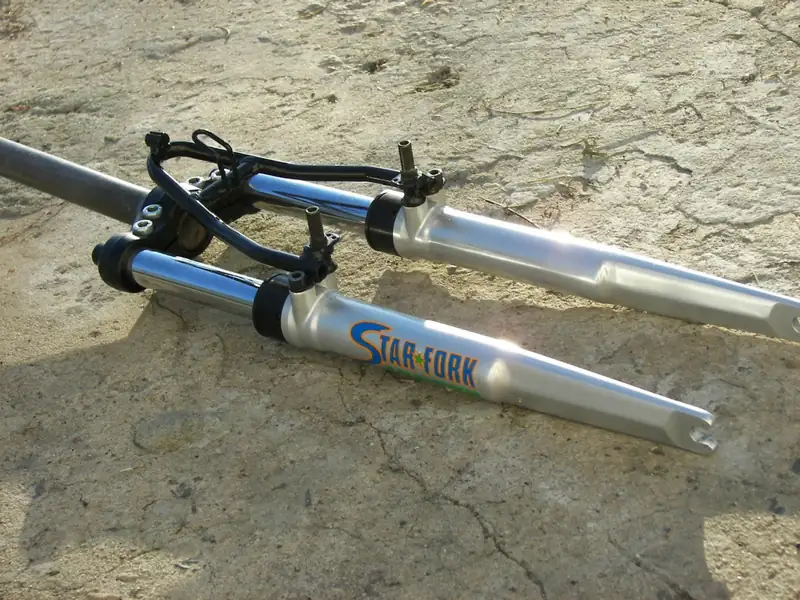
Somewhere in a garage, a Marzocchi Bomber sits clamped to a workbench. The fork is 20–30 years old, the stanchions still shine, the crown geometry is flawless — but a worn seal, a dead elastomer, or a corroded damper cartridge has rendered it useless. Its owner has one of two options: scrap a piece of engineering history, or find a part that no longer officially exists. For millions of riders around the world, this is not a nostalgic dilemma. It is a daily reality.
Vintage mountain bikes — particularly full-suspension and hardtail machines from the late 1980s through the mid-2000s — are experiencing a remarkable cultural resurgence. Driven by nostalgia, a distrust of planned obsolescence, and a growing desire for craftsmanship over constant consumption, riders are returning to their old steeds. And standing at the very intersection of culture, economics, and ecological responsibility is one surprisingly specific component: the suspension fork.
The Ecological Argument: Repair is the Revolution
Sustainability experts like Dutch researcher Erik Bronsvoort have made the case plainly: "It comes down to using a bicycle for as long as possible — in order to reduce the CO₂ footprint per kilometre." A new mountain bike generates several hundred kilograms of CO₂ before a single wheel ever turns. The supply chain — raw material extraction, component manufacture predominantly in Asia, transoceanic shipping, final assembly — is an ecological cost that is paid upfront and invisibly.
The circular economy offers an alternative logic: keep materials in motion, eliminate waste by design, and repair what already exists. A fork that is serviced and returned to the trail produces near-zero new emissions. A fork that ends up in landfill because a €12 seal is unavailable represents an absurd systemic failure.
The bike industry, despite its green reputation, has a significant planned obsolescence problem. "These companies don't promote repair, just because it's unprofitable for them," as one repair technician put it in a peer-reviewed study on bike waste and circular economy models. Proprietary standards, discontinued components, and crash-replacement warranties that incentivise disposal rather than repair are structural barriers — and vintage suspension forks sit squarely in the gap they leave behind.
Culture: Machines with Memory
A Marzocchi Bomber, a Rock Shox Judy, a Manitou SX — these are not merely mechanical devices. They are cultural artefacts. They represent a formative era of mountain biking, when the sport was being invented in real time, when engineers were experimenting with elastomers and oil damping and coil springs, when the geometry of a front end determined whether you conquered a trail or went over the bars.
The vintage MTB community — active across forums, Instagram pages, and events like Retrobike gatherings across Europe — treats these bikes with something close to reverence. The frame and fork are frequently the last original parts on a bike, carrying the identity of the machine across decades. When a fork dies for lack of a part, a piece of cycling history dies with it.
There is also something politically meaningful about this community. It rejects the throwaway paradigm. It insists that objects can hold value across time. It prizes the skilled hands of a mechanic over the marketing of a new model year. These are not simply preferences — they are a stance toward material culture.
"Every restored fork is a small act of refusal — refusal to accept that things must always be replaced rather than repaired."
Society: Skills, Access & the Right to Repair
The European Right to Repair movement, which grew to over 40 organisations across 16 countries, campaigns on a simple premise: consumers should have access to the parts and information needed to fix the things they own. In March 2022, the European Parliament moved to extend these principles further into product legislation. Vintage suspension forks are a perfect test case: sophisticated enough to require engineering knowledge, old enough that official support has completely lapsed, and popular enough to sustain a real market.
Re-engineering spare parts for vintage forks does more than keep bikes rolling. It keeps mechanical skills alive. It creates entry points into materials engineering, reverse engineering, and precision manufacturing for small workshops. It empowers the individual mechanic and the small-batch producer — entities the current system of proprietary, mass-produced components systematically excludes.
Vintage bike restoration is also a gateway sport. It is accessible in cost, rich in learning, and deeply social. A teenager rebuilding a 1998 Marzocchi in a garage is learning metallurgy, hydraulics, and patience — and connecting to a lineage of riders who built mountain biking into what it is today.
Economics: A Niche That Punches Above Its Weight
The business case for producing parts for vintage suspension forks is more compelling than it might first appear. Demand is stable and growing: global vintage MTB communities number in the hundreds of thousands, and unlike fashion trends, the appetite for restoration is tied to a finite and irreplaceable supply of frames — meaning no saturation point is ever reached. The pool of forks needing service will persist for decades.
Critically, the willingness to pay in this community is high. A rider who has restored a frame over months of work, sourced a period-correct groupset, and built a wheel by hand is not going to abandon the project over a €40 fork seal. They will pay premium prices for correct, quality parts. This is a market defined by passion economics rather than price sensitivity.
Specialist operators already demonstrate the viability. Workshops like Bicycle Suspension Berlin, Specialty Retro Products (USA), and Bike Recyclery have built businesses around exactly this supply gap. Some offer reverse-engineered seals, bushings, and elastomer kits for models that have been out of production for 20+ years. The demand consistently outpaces supply.
Perhaps one of the most instructive examples of genuine dedication is Marzocchi Mark at mtbforksbymark.com — a one-man operation known for excellent Marzocchi fork service and rebuilds. Mark is a master technician from the very beginning of the Marzocchi era, and he lives just five minutes from the former Marzocchi USA headquarters in California. Having good connections, I guess he was the only one being allowed driving into the Marzocchi Storage with his pickup organising lots of spares, when Marzocchi had to close the doors and stopped servicing spare parts.
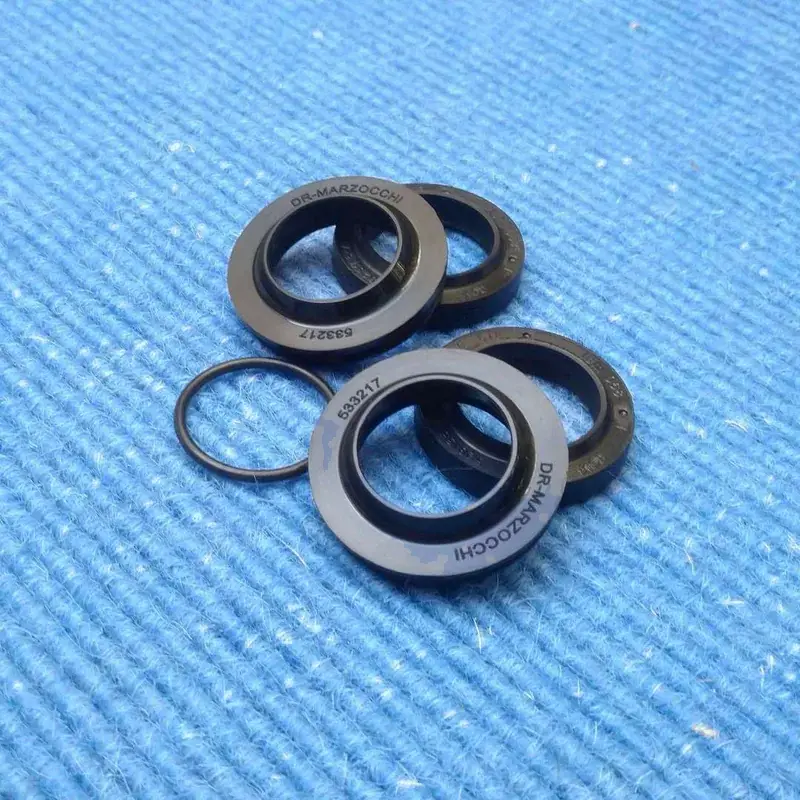
Dr-Zocchi follows the same principle — dedicated specifically to Marzocchi suspension forks, one of the most beloved and most under-served marques in vintage MTB. Rather than attempting to cover every brand, Dr-Zocchi goes deep: documenting models, cataloguing cross-compatibility, sourcing and re-engineering the seals, bushings, and other needed components that Marzocchi owners have been unable to find for years. The combination of a curated web platform, transparent parts documentation, and direct community engagement is precisely the formula that works in this niche — depth over breadth, trust over volume.
For a small manufacturer or engineering workshop, the barriers to entry are lower than in mainstream cycling components: no need for massive tooling investment, no retail distribution network, no brand marketing budget. A CNC machine, constructive and material expertise, and a deep parts catalogue is the core asset stack.
Methodology: How Re-Engineering Actually Works
Producing parts for discontinued suspension forks is not simply a matter of ordering from a catalogue. It requires a structured approach that blends reverse engineering, materials science, and practical testing.
Acquire a reference unit, disassemble completely, and document every dimension with precision tooling. Cataloguing wear patterns reveals which parts fail first and why.
Identify original materials — durometer of elastomers, alloy composition of bushings, lip geometry of seals. Modern equivalents must match or improve on original specifications.
Measured dimensions are translated into precise 3D models using CAD software. This stage includes preparing geometry for manufacturing — defining tolerances, draft angles, and surface finishes — as well as comparing the new design against the original reference dimensions. Where structural loads are a concern, finite element analysis (FEA) is applied to validate wall thicknesses, thread engagement, and stress concentrations before any material is cut.
Produce first-run parts, typically via CNC machining or injection moulding, and test fit across multiple fork units. Tolerances in suspension are unforgiving — a tenth of a millimetre matters.
Community collaboration is essential. Engaging experienced mechanics and end-users who know these forks intimately provides feedback that laboratory testing cannot replicate.
Produce documented, numbered runs. Build a public cross-reference catalogue that maps parts to fork models and years — the true long-term asset of the business.
Strengths & Challenges
Sources & References
Academic, industry, and community sources. All URLs accessed April 2026.
Academic & Research
- Szto, C. & Wilson, B. (2022). Reduce, re-use, re-ride: Bike waste and moving towards a circular economy for sporting goods. International Review for the Sociology of Sport.
- Bronsvoort, E. & Gerrits, M. (2020). From Marginal Gains to a Circular Revolution. circularcycling.nl
- Trek Bicycle Corporation (2021). Sustainability Report. — CO₂ lifecycle data for Trek Marlin (~116 kg).
Industry & Editorial
- IAA Mobility (2022). How the circular economy could change the bicycle industry.
- Low-Tech Magazine (2023). Can We Make Bicycles Sustainable Again?
- Circular Economy Showcase. Bikes — Circular Economy Showcase. (Right to Repair campaign data: 40+ organisations, 16 EU countries.)
Technical Reference — Suspension, Materials & Engineering
- Bicycle Suspension. Wikipedia. Elastomer, coil, and oil-damped fork systems — historical context and technical fundamentals.
- Suspension Dampers: A Beginner's Guide to What Goes on Inside. Singletracks. How damping systems work internally: oil viscosity, plunger mechanisms, adjustable circuits.
- 6061 and 7005 Aluminium Alloys for Bicycle Frames. Aluminium-Guide.com. Comparative material properties of the alloys most used in fork stanchion and crown manufacturing.
- Rod Seal Materials Guide. Polypacs Seals. Polyurethane, nitrile, and PTFE seal compound properties — abrasion resistance and chemical compatibility for fork dampers.
- Understanding Bronze Bushings: Properties and Uses. BronzeLube. Sintered vs solid bronze bushing properties, self-lubrication, and wear resistance in precision guides.
Specialist Vintage MTB Parts & Service
- Marzocchi Mark — MTB Forks by Mark. One-man specialist for Marzocchi fork service and rebuilding. mtbforksbymark.com
- Bicycle Suspension Berlin. Specialist for Marzocchi parts and service (Berlin).
- Specialty Retro Products (USA). Vintage suspension fork parts shop.
- Bike Recyclery. NOS RockShox, Manitou & Marzocchi spare parts (1994–2007).
- Dr-Zocchi. Specialist platform for Marzocchi suspension fork parts, documentation and older forks rebuilding. dr-zocchi.com